Which Traeger Should You Buy? Every Current Model, Ranked by Who It Suits

Cooking for thirty years, since I was the thirteen-year-old making dinner for my two brothers while Mum worked late. A brisket from a family friend called Bubba in East Texas turned me toward live fire for good. Still chasing that smoke on a kamado most weekends.
Just so you know, some links on this page are affiliate links. If you buy something through one, I earn a small commission at no extra cost to you. It never changes what I recommend, but it does help toward the coals.
The Traeger to buy for most people is the Woodridge Pro, and it comes down to one feature the old Pro line never had: Super Smoke mode, which finally gives a Traeger the smoke character people buy a pellet grill hoping for. If you want an enclosed cabinet and casters on a patio you like to rearrange, step across to the Pro Plus; if you want a real steakhouse sear without owning a second grill, only the Elite and its infrared side burner get you there.
Here is why any of this is worth the money. A pellet grill is the piece of gear that turns "I should learn to smoke a brisket" into something you actually do on a Tuesday. You set a temperature, the auger feeds hardwood, and the grill holds that number for twelve hours while you go and live your life. Traeger rebuilt its whole range around the Woodridge line, so the lineup you find now is not the one most buying guides still describe. This is where every current model sits and who each one is genuinely for.
Not sure which setup is right for you?
Take the 60-second quizWhat is the difference between every Traeger model?
Traeger's current range splits on three things only: how much grate you get, whether you get Super Smoke mode and the pellet sensor, and what is bolted to the cart. Everything else, the app, the auger, the controller logic, is shared. This table is the whole lineup on those terms.
| Model | Cooking area | Super Smoke mode | Pellet sensor | Cart extras |
|---|---|---|---|---|
| Traeger Pro 22 | 572 sq in | No | No | Open cart, meat probe included |
| Traeger Woodridge | 860 sq in | No | No | Open cart, no folding side shelf |
| Traeger Woodridge Pro | 970 sq in | Yes | Yes | Folding side shelf |
| Traeger Woodridge Pro Plus | 970 sq in | Yes | Yes | Enclosed cabinet, four casters |
| Traeger Woodridge Elite | 970 sq in | Yes | Yes | Enclosed cabinet, insulated body, 1100W infrared side burner |
| Traeger Ironwood 885 | 885 sq in | Yes | Yes | D2 drivetrain, folding shelf |
Read that top to bottom and the ladder is obvious. The jump that changes how the grill cooks is Woodridge to Woodridge Pro. Everything above the Pro changes what the grill is like to own, not what comes off it.
Which Traeger should you buy if you only buy one?
Buy the Woodridge Pro. It is the rung where a Traeger stops being a convenient outdoor oven and starts being a smoker.
Two features do that work. Super Smoke mode runs the fan and auger in a cycle that produces heavier smoke in the 165F to 225F range, and it is the honest answer to the oldest complaint about Traegers, that pellet smoke is too polite next to an offset. It does not turn the grill into a stick burner, and anyone telling you it does is selling something. What it does is close enough of the gap that you stop wishing you had bought charcoal.
The second is the digital pellet sensor. If you have ever set an alarm for 3am to check a hopper, you understand immediately why this matters. The sensor reads the pellet level and warns you through the app before you run dry, which is the difference between a twelve-hour cook you sleep through and a twelve-hour cook that stalls at hour nine with a cold firepot and a half-done brisket.
The grate is 970 sq in split across two racks, which Traeger's spec sheet lists as 585 sq in on the lower and 385 sq in on the upper. In practice that is a holiday-sized bird on the bottom with sides above, or two pork butts, or four racks of ribs laid flat rather than rolled. The hopper holds 24 lb, enough for an overnight cook without a refill.
Where it loses is heat. It tops out around 500F, which gives you pale grill marks rather than a crust. If a hard sear matters as much as smoke, read the honest comparison in Traeger Woodridge Pro vs Weber Searwood 600, because Weber's 600F DirectFlame zone genuinely beats it on that one axis.
Who should buy the base Woodridge instead?
Buy the base Woodridge if you want the current Traeger platform and you know you will not miss Super Smoke.
It is a lot of grill. 860 sq in is only around a hundred square inches off the Pro, the hopper is the same 24 lb, the app is the same WiFIRE, and the temperature ceiling is the same. For anyone cooking chicken, ribs, burgers and the occasional pork shoulder, this does all of it and the food is good.
AmazingRibs notes that the base model goes without three things the Pro includes: Super Smoke mode, the digital pellet sensor, and the folding side shelf. The side shelf is a convenience you can live without or replace. The other two are the real decision. Without Super Smoke you get competent pellet smoke, the kind that gives you a thin blue haze and a mild ring, and plenty of people are perfectly happy there. Without the pellet sensor, long cooks go back to being something you check on.
My honest read is that the Woodridge is the right buy for the cook who mostly grills and smokes sometimes, and the wrong buy for the cook who bought a pellet grill specifically to do brisket. If brisket is the reason you are shopping, the Pro is the one that will not disappoint you a year in.
One thing worth knowing: the base Woodridge and the Pro take the same covers and the same accessories, so nothing you buy for one is wasted if you upgrade later.
Is the Woodridge Pro Plus worth it over the Pro?
Only if you want the cabinet and the casters, because the cooking hardware is identical.
This is the clearest decision in the range and the one most likely to be oversold to you. The Pro Plus takes the Woodridge Pro and adds the enclosed storage cabinet from the Elite plus four casters on the cart. Same 970 sq in, same two-rack split, same Super Smoke mode, same pellet sensor, same ceiling. Nothing about the food changes.
So the question is not whether the Pro Plus is better. It is whether a lockable dry cupboard under your grill and the ability to roll it across a patio is worth the step up to you. For some people it plainly is. If your pellets currently live in a bin in the garage and you carry a bag out every cook, the cabinet solves a real daily annoyance, and damp pellets are the single most common cause of auger jams. If your grill lives on a deck you hose down, or you shuffle it to one end for parties, the casters earn their keep.
If your grill sits in one spot and you already have somewhere dry for pellets, buy the Pro and spend the difference on a decent cover and a couple of bags of hardwood. That is not me being tight. It is that the Pro Plus gives you storage, not cooking, and you should know exactly what you are paying for.
When is the Woodridge Elite the right call?
When you want a real sear and smoke from the same cart, because the Elite is the only Traeger with an infrared side burner.
The Elite adds two things over the Pro Plus that do change the cooking. The first is an 1100W infrared side burner, exclusive to this model in the range. That is the answer to the Traeger sear problem: you smoke a steak to temperature on the main grate, then finish it over infrared heat that will actually build a crust. A pellet grill that tops out near 500F cannot do that on its own, and the usual workaround is cast iron on a separate burner. The Elite puts it on the same machine.
The second is the insulated body. Double-wall insulation matters more than people expect if you cook through winter, because an uninsulated pellet grill burns noticeably more fuel holding 225F in cold weather and fights you on windy days. If you are smoking in January, this is the model that stops you fighting the ambient temperature.
Who should skip it: anyone who already owns a kettle, a kamado or a gas grill for high heat. You are then paying for a searing solution you have in the yard already. The Elite is for the cook who wants one cart to do everything, and on that brief it is the best thing Traeger sells.
Where does the Ironwood 885 fit now?
The Ironwood 885 is the previous flagship, and it still makes sense if you want the D2 drivetrain and Super Smoke at 885 sq in.
It sits in an odd spot in the current range. The Woodridge Pro gives you more grate and the newer platform, so on paper the Ironwood is outflanked. In practice the Ironwood 885 has a long, well-documented ownership record, which is worth something real when you are spending this much. Owner reports on the D2 drivetrain and its controller have been consistent for years, and there is a mature accessory and parts ecosystem around it.
Capacity is 885 sq in, Super Smoke is included, and it runs WiFIRE like everything else. If you find it sitting alongside the Woodridge Pro and the Ironwood is the one you can get, you are not making a mistake. The side-by-side detail is in Traeger Woodridge Pro vs Ironwood 885, and if you are weighing it against the Timberline instead, Traeger Ironwood vs Timberline covers that one.
Is the Traeger Pro 22 enough grill?
The Pro 22 is enough grill for a family of four and not enough for a crowd, and it is the cheapest way into the Traeger ecosystem.
572 sq in sounds like a lot until you lay a brisket on it. It takes a couple of racks of ribs, a chicken and vegetables, or a pork shoulder with room to spare. What it will not comfortably do is a holiday bird with sides, and it will not take four racks flat.
You also go without Super Smoke mode and the pellet sensor, which puts it in the same position as the base Woodridge but with meaningfully less grate. A meat probe comes in the box, and the app works the same.
I would point most people past it, and here is the honest reason: the gap between the Pro 22 and the base Woodridge buys you nearly 300 sq in and a current-generation platform, and that is the better value if you can stretch. The Pro 22 earns its place when the budget is genuinely fixed, or when the grill is going on a small balcony where the Woodridge simply will not fit.
What happened to the Traeger Pro 575, Pro 780 and Pro 34?
Traeger built its current lineup around the Woodridge series, and the Pro 22 is the only rung of the old Pro family that still sits in it.
This matters if you have been reading older buying guides, because a great many of them still name the Pro 780 as the Traeger to buy. It was a good grill and it sold in enormous numbers. It is not part of the Woodridge-era lineup, and the Woodridge Pro is the model that now occupies its place, with more grate, Super Smoke mode and the pellet sensor that the Pro line never had.
If you already own a Pro 575 or Pro 780, none of this is a reason to replace it. A well-kept Pro 780 will outlast plenty of newer grills, and it takes the same pellets as everything in the current range. If you are shopping now, shop the Woodridge line and treat any guide still heroing the Pro 780 as out of date. The direct generational comparison is in Traeger Woodridge Pro vs Pro 780.
Which Traeger is best for a beginner?
For a first pellet grill, buy the base Woodridge, and buy the Woodridge Pro if brisket is why you are shopping.
Pellet grills are the easiest smokers to learn on, which is the whole reason the category exists. There is no fire to manage, no vents to balance, and no 3am refuel. You set a number and the grill holds it. That makes the beginner question less about skill level and more about what you intend to cook.
If you are learning to grill and want smoke as a bonus, the base Woodridge is plenty and you will not feel short-changed. If the picture in your head is a brisket with a real ring and a bark worth photographing, start at the Woodridge Pro, because Super Smoke mode and the pellet sensor are precisely the two features that make that cook forgiving.
What I would not do is start at the Pro 22 to save money and then wish you had more grate by your second summer. That is the most common upgrade regret in this category. If your budget is tight, the best pellet grill for beginners covers the cheaper non-Traeger options honestly, and some of them are genuinely good.
Do you actually need Super Smoke mode?
You need Super Smoke mode if you care about smoke flavor, and you can skip it if you mostly grill.
Super Smoke works by cycling the fan and auger to produce more smoke in the low-temperature range, roughly 165F to 225F. The effect is real and it is also finite. A Traeger in Super Smoke still produces cleaner, lighter smoke than a charcoal offset, and anyone promising you offset flavor from a pellet grill is overselling it.
The practical test is what you cook. Brisket, pork shoulder, ribs and anything that sits at low temperature for hours are where smoke flavor is built, and those are the cooks where Super Smoke changes the result. Chicken thighs, burgers, vegetables and a weeknight tray of salmon are cooked hot and fast, and the mode barely gets a chance to work.
So if your honest answer is "mostly weeknight dinners with a brisket twice a summer", the base Woodridge will not disappoint you. If it is "I bought this to do low and slow properly", pay for the Pro.
How much cooking area do you need for a holiday bird?
For a holiday turkey with sides on the same grill, 860 sq in is comfortable and 572 sq in is not.
A whole bird needs its own footprint, and the mistake people make is measuring the bird rather than the bird plus everything else. On the base Woodridge's 860 sq in you can run a turkey on the main grate with trays above. On the Woodridge Pro's 970 sq in you do the same with room to move things around, which matters more than it sounds when the grill is full and you are working fast.
A pellet grill is genuinely good at a big bird, and that is worth saying plainly. It holds a steady temperature for the whole cook without you opening a door, the skin comes out well if you push the heat up at the end, and you get smoke on the meat that an oven cannot give you. It also frees the kitchen oven entirely, which on a day when four things need roasting is the real argument.
If you are planning that cook on a Pro 22, the realistic answer is bird only, sides indoors. For wood, a lighter blend suits poultry better than a heavy hickory. The best wood pellets guide covers the pairings.
Should you buy a Traeger or something else?
Buy a Traeger for the app and the ecosystem, and look elsewhere if searing or price leads your decision.
Traeger's advantage is not that it makes the best pellet smoke. It is that WiFIRE is the most mature app in the category, the accessory range is the deepest, and parts are easy to get for grills that are years old. For a lot of buyers that is worth paying for and it is a legitimate reason to choose one.
The honest competition: Weber's Searwood 600 beats it on sear with a 600F DirectFlame zone and the Rapid React PID controller, covered in Traeger Woodridge Pro vs Weber Searwood 600. Pit Boss generally gives you more grate for the money, in Pit Boss vs Traeger. Camp Chef's ash-cleanout and smoke box have their own following, in Traeger vs Camp Chef. And if you want the broader field rather than one brand's ladder, the best pellet grill ranks the category.
Which Traeger model is the best value?
The base Woodridge. It carries the same 24 lb hopper, the same WiFIRE app and the same temperature range as the Pro at 860 sq in rather than 970, and the features it drops, Super Smoke mode and the pellet sensor, only matter if you cook low and slow regularly. For a cook who mostly grills, it is the most grill per pound in the range.
Is the Woodridge Pro better than the Ironwood 885?
On paper yes, because it has more grate and sits on the newer platform. The Ironwood 885 holds its own on ownership record, with years of consistent owner reports on the D2 drivetrain and a mature parts ecosystem. If both are in front of you, take the Woodridge Pro. If the Ironwood is the one you can get, you are not settling.
Can any Traeger sear a steak properly?
Only the Woodridge Elite, and it does it with a 1100W infrared side burner rather than the main grate. Every pellet grill in the range tops out around 500F, which marks a steak rather than crusting it. The usual workarounds are a set of GrillGrates or finishing in cast iron. If a steakhouse crust is a regular requirement, either buy the Elite or pair a cheaper Traeger with a kettle.
Do I need the pellet sensor?
If you cook overnight, it is the feature you will be most glad you paid for. It reads the hopper level and warns you through the app before the grill runs dry, which is the difference between sleeping through a brisket and finding a cold firepot at hour nine. For cooks under about four hours you can simply look in the hopper before you start.
Are Traeger pellets worth it over cheaper brands?
Traeger's own hardwood blends are consistent and low-ash, and consistency is what you want in an auger. Plenty of other brands are good. What matters more than brand is that pellets are bone dry, because damp pellets swell, bridge in the auger and are the most common cause of a feed jam. Buy what you will use in a season and keep it sealed and off a cold floor.
Does Super Smoke mode work on every model?
No. It starts at the Woodridge Pro. The Pro 22 and the base Woodridge do not include it, while the Woodridge Pro, Pro Plus, Elite and Ironwood 885 all do.
Before you cook on it
Two things are worth having from day one rather than discovering you need them. A sealed container for pellets, because damp pellets are the main cause of auger jams, and a decent cover if the grill lives outside uncovered. For wood, Traeger's house blend is the sane default and avoids overthinking pairings while you learn the grill.
What I'd buy today
The Woodridge Pro, without much hesitation. It is the rung where Super Smoke mode and the pellet sensor turn a Traeger from a very convenient outdoor oven into a smoker you can trust with an overnight brisket, and the 970 sq in across two racks covers everything from a weeknight tray of chicken to a holiday bird with sides above it.
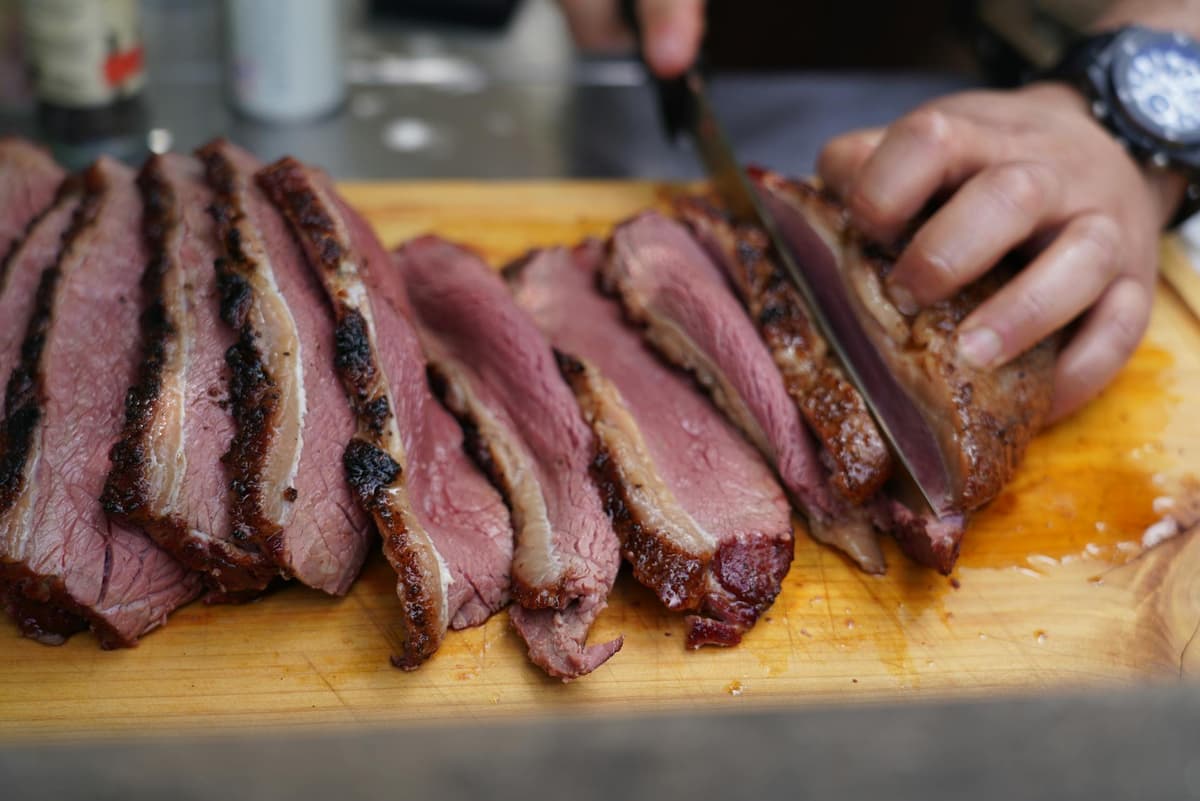
The first time you pull a brisket off it with a proper ring and a bark that crackles under the knife, you will understand why people organise their weekends around this. That is the whole point of the thing.
Get the Traeger Woodridge Pro on Amazon and start planning the first cook.
As an Amazon Associate, I earn from qualifying purchases.
Products Mentioned in This Guide
Traeger Woodridge Pro
Traeger
Traegers 2026 mid-tier flagship and the one that goes head-to-head with Webers Searwood. 970 sq in, ...
Check Price on AmazonTraeger Woodridge
Traeger
The base rung of Traeger's Woodridge line. 860 sq in of grate, a 24 lb hopper and around 500F at the...
Check Price on AmazonTraeger Woodridge Pro Plus
Traeger
The Woodridge Pro with the Elite's enclosed storage cabinet and four casters added. Same 970 sq in a...
Check Price on AmazonTraeger Woodridge Elite
Traeger
The top of the Woodridge line. Everything the Pro does plus a built-in infrared side sear station an...
Check Price on AmazonTraeger Ironwood 885
Traeger
Step up from the Pro with Super Smoke mode, a pellet sensor, and 885 sq in of cooking space. The Iro...
Check Price on AmazonTraeger Pro 22
Traeger
The surviving rung of the old Pro line and the cheapest way into a Traeger that still runs the app. ...
Check Price on AmazonTraeger Signature Blend Hardwood Pellets (18 lb)
Traeger
Traeger's house blend of hickory, maple and cherry, now sold in an 18 lb bag rather than the old 20 ...
Check Price on AmazonStill weighing it up? Get a personalised pick in about 60 seconds.
Take the gear quizFrequently Asked Questions
Which Traeger model is the best value?
The base Woodridge. It carries the same 24 lb hopper, the same WiFIRE app and the same temperature range as the Pro at 860 sq in rather than 970, and the features it drops, Super Smoke mode and the pellet sensor, only matter if you cook low and slow regularly. For a cook who mostly grills, it is the most grill per pound in the range.
Is the Woodridge Pro better than the Ironwood 885?
On paper yes, because it has more grate and sits on the newer platform. The Ironwood 885 holds its own on ownership record, with years of consistent owner reports on the D2 drivetrain and a mature parts ecosystem. If both are in front of you, take the Woodridge Pro. If the Ironwood is the one you can get, you are not settling.
Can any Traeger sear a steak properly?
Only the Woodridge Elite, and it does it with a 1100W infrared side burner rather than the main grate. Every pellet grill in the range tops out around 500F, which marks a steak rather than crusting it. The usual workarounds are a set of GrillGrates or finishing in cast iron. If a steakhouse crust is a regular requirement, either buy the Elite or pair a cheaper Traeger with a kettle.
Do I need the pellet sensor?
If you cook overnight, it is the feature you will be most glad you paid for. It reads the hopper level and warns you through the app before the grill runs dry, which is the difference between sleeping through a brisket and finding a cold firepot at hour nine. For cooks under about four hours you can simply look in the hopper before you start.
Are Traeger pellets worth it over cheaper brands?
Traeger's own hardwood blends are consistent and low-ash, and consistency is what you want in an auger. Plenty of other brands are good. What matters more than brand is that pellets are bone dry, because damp pellets swell, bridge in the auger and are the most common cause of a feed jam. Buy what you will use in a season and keep it sealed and off a cold floor.
Does Super Smoke mode work on every model?
No. It starts at the Woodridge Pro. The Pro 22 and the base Woodridge do not include it, while the Woodridge Pro, Pro Plus, Elite and Ironwood 885 all do.
Related Guides
Also worth picking up
Accessories that make a real difference
Some products in this section are part of Amazon Creator Connections campaigns. We only include products we'd recommend regardless.
LEVIASHER Cast Iron Grill Press 2-Pack
Two heavy-duty 7" cast iron grill presses (2.3lb each) with wood handles. Perfect for smash burgers, paninis, bacon, and getting a proper sear on steaks. Striped base leaves clean grill marks.
Check Price on AmazonIAN's Smash Burger Press Kit
Everything you need for perfect smash burgers: 6.5" flat cast iron press, stainless steel spatula, patty papers, and a seasoning shaker, all in a matte black gift box. Designed in the USA.
Check Price on Amazon